

Delegates from some of the nation’s leading financial organizations have embarked on a trade mission to China to showcase Canada within one of the globe’s largest economies.
Finance Minister François-Philippe Champagne is currently in Beijing aiming to boost Chinese investments in Canada and to elevate exports to China by 50 percent by the year 2030.
Accompanying him is Bank of Canada Governor Tiff Macklem, along with leaders from Canadian banks and insurance firms keen to enhance their footprint in China.
Champagne stated that these businesses “can contribute to achieving the goal established by the prime minister.”
During a trip to Beijing in January, Prime Minister Mark Carney set this Chinese export goal, indicating a departure from a prolonged period of strained relations by advocating for a move towards “principled pragmatism.”
In 2018, worries about the potential for Canadian cybersecurity breaches involving Chinese tech giant Huawei—along with the detainment of one of its executives at the request of the U.S.—resulted in significant diplomatic tensions with Beijing.
These tensions encompassed allegations of hostage diplomacy, interference in elections, and high tariffs on Chinese electric vehicles and Canadian agricultural exports.
-
Canada’s finance minister aims to shore up support, investment in China
-
The Huawei executive whose arrest in Vancouver plunged Canada into a global trade war
Carney’s meeting with Chinese President Xi Jingping in January facilitated a diplomatic reset, leading to an agreement that permits the annual import of 49,000 Chinese electric vehicles at a lower tariff rate in exchange for China lifting some of its retaliatory tariffs.
Since U.S. President Donald Trump initiated a trade war a year ago, jeopardizing trade between the North American neighbors, China has become an even more vital trading ally for Canada.
Macklem emphasized this point in Beijing.
“We speak about diversifying our trade. It is essential that we do so. It’s crucial for our prosperity,” he remarked.
On Thursday, Champagne and Macklem convened with heads of Canadian financial institutions, including Kevin Strain, CEO of Sun Life, Scott Brison, vice-chair of BMO Wealth Management, and Manulife CEO Phil Witherington.
“We cannot be global leaders while relying solely on 40 million customers. However, by tapping into mega economies like China, India, and the United States, we can achieve global prominence,” Witherington noted.
While China ranks as Canada’s second-largest trading partner after the U.S., Canada’s exports of $34 billion to China last year were overshadowed by $90 billion in imports. The government aims to address this trade imbalance and is counting on the financial sector to assist.
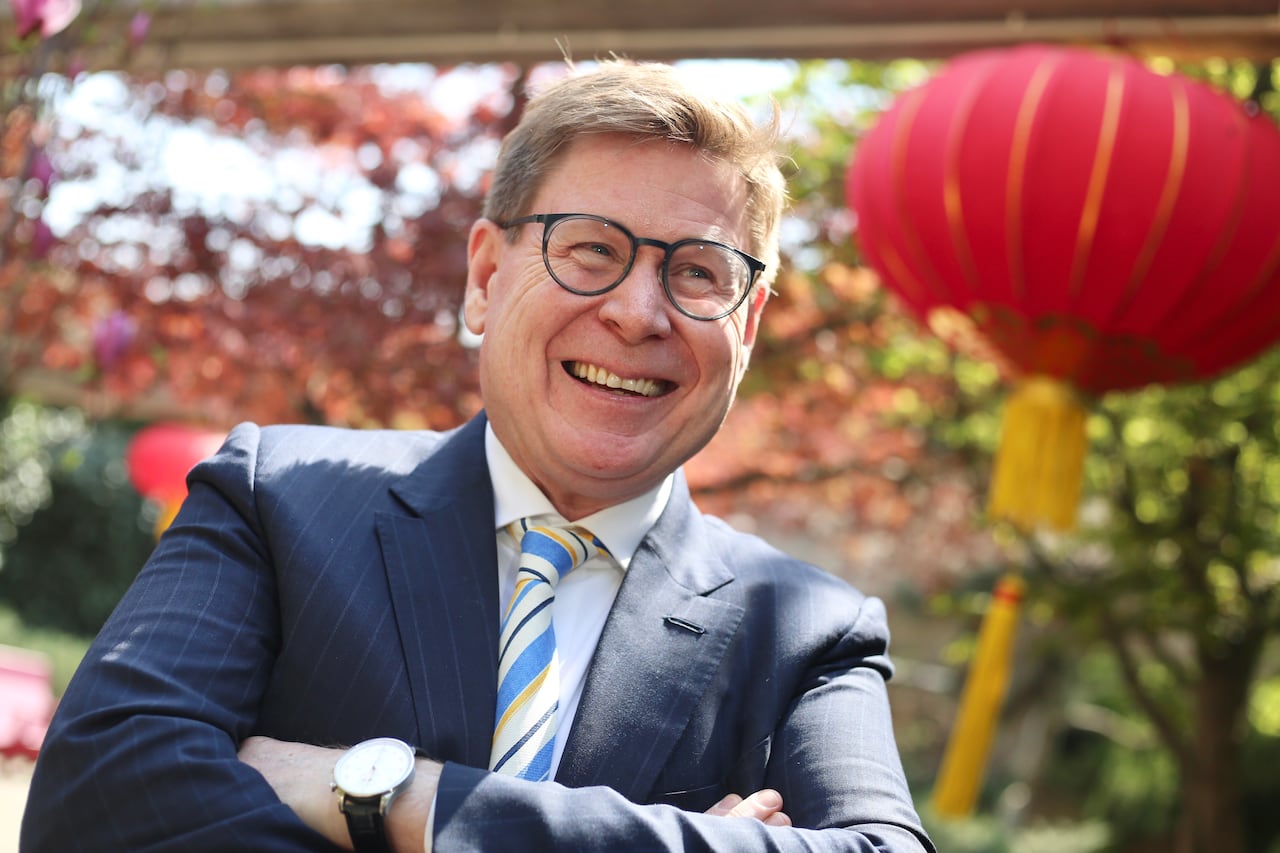
CEO of Sun Life Kevin Strain is seen at the Canadian Embassy in Beijing on Thursday. (Lisa Xing/CBC)
With the Chinese market becoming a renewed focus, regular visits of this nature are likely to play a significant role in fostering business opportunities.
“You can pretend to care, but you cannot fake attendance,” stated Strain. “That aids in opening up channels at the highest levels.”
Among the key individuals Champagne is expected to meet during his visit is Vice-Premier He Lifeng, who is set to host the finance minister on Friday.

