


Two chiefs from First Nations are urging Prime Minister Mark Carney to express regret for his comment claiming he could “outlast” a First Nations woman protesting against mercury contamination in her community.
Chrissy Isaacs, a member of the Grassy Narrows community affected by mercury poisoning, was in Toronto on Monday advocating for compensation from the provincial government due to mercury pollution.
The Dryden Paper Mill discharged thousands of kilograms of mercury into the local river system from the 1960s to the 1970s, an incident widely recognized as one of Canada’s most significant environmental catastrophes. Community members are still confronting the consequences today.
Isaacs, along with other community members and supporters, attended a press conference hosted by Carney and Ontario Premier Doug Ford to unveil new housing funding. The sounds of their chants and shouts regarding the mercury crisis could be heard in the background.
-
Northern Ontario homebuilder welcomes investment to cut developer charges
-
Ford, Carney, Chow to spend $3B on Waterfront East LRT in Toronto
Carney remarked, “I can outlast her,” sharing a brief laugh with Ford and Toronto Mayor Olivia Chow.
Grassy Narrows First Nation Chief Sherry Ackabee stated that Carney should apologize for his comments.
“Shame on you, Prime Minister. You are making a mockery of my people,” Chief Ackabee conveyed to The Canadian Press. “And to all those laughing behind him, shame on all of you.”
Chief Roland Fisher from Wabaseemoong Independent Nations emphasized that the government must not disregard the worries of his community and called for Carney to engage with them.
Carney unaware of demonstrators: PMO
According to a media statement from the Prime Minister’s Office, Carney was unable to hear the demonstrators and that his staff engaged with them to understand their concerns. It remains unclear if Carney was aware of the reason for the protest when he made his statement.
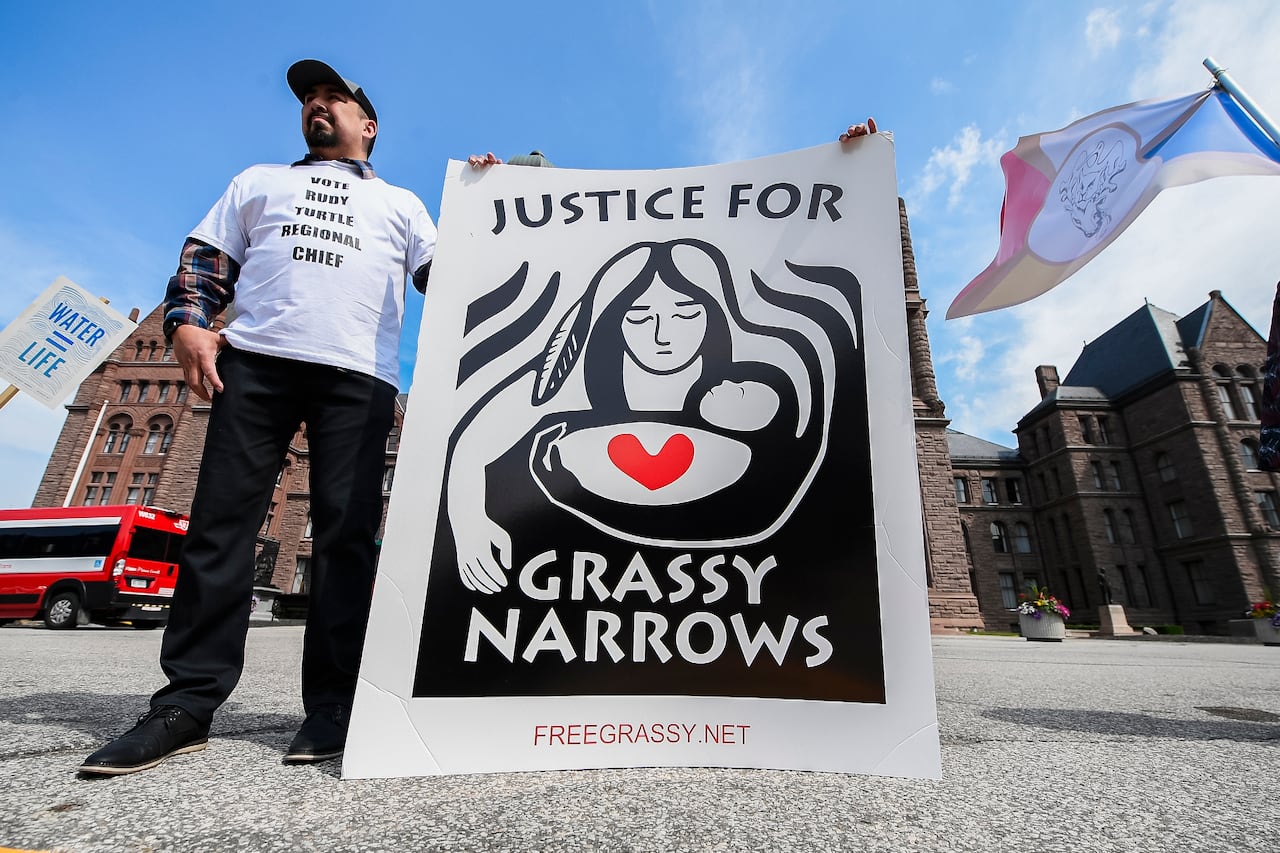
The Dryden Paper Mill released thousands of kilograms of mercury into the Grassy Narrows First Nation community’s river system from the 1960s to 1970s. (Christopher Katsarov/The Canadian Press)
PMO spokesperson Audrey Champoux mentioned that Indigenous Services Minister Mandy Gull-Masty is “in communication with Grassy Narrows leadership to advance essential projects such as a new health center, housing, and a mercury care home to provide support for those impacted by mercury poisoning, close to their homes.”
Ackabee expressed that she has not yet received any communication from the minister and does not believe the assertion that Carney was unaware of the protest’s nature.
“He is merely attempting to cover himself now as he realizes the inappropriateness of his words. Shame on him,” she stated.
90% of community affected by mercury poisoning: study
Grassy Narrows is situated approximately 150 kilometers from Dryden, Ontario, near the Ontario-Manitoba border. Wabaseemoong Independent Nation is also in close proximity.
A 2024 study conducted by Western University revealed that emissions from the mill, including sulphate, continue to negatively impact the community by producing methylmercury.
The research indicated that methylmercury levels—the most toxic form of mercury—in fish from the Wabigoon River may be twice as elevated as they would have been without the mill’s discharge.
The mill is located upstream from the Grassy Narrows First Nation, which has a population of fewer than 1,000 individuals.
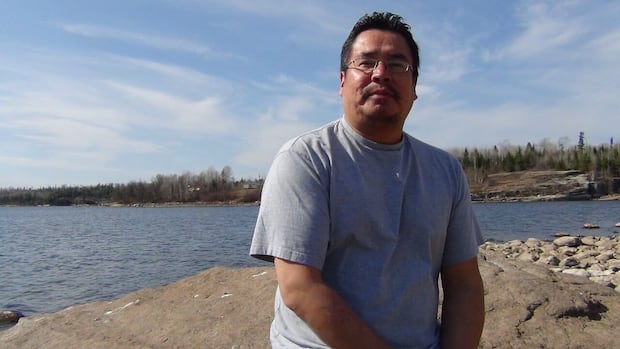
‘I grew up not knowing that the land, the water was already poisoned,’ Grassy Narrows First Nation Chief Randy Fobister said.
The community’s water was tainted when the mill released 9,000 kilograms of mercury into the English-Wabigoon River system during the 1960s. While the mill ceased using mercury in its operations in the 1970s, levels of mercury downstream from the facility have not significantly decreased since the 1980s.
One report estimated that around 90% of Grassy Narrows residents experience some level of mercury poisoning. This heavy metal can be transmitted from mothers to their unborn children, creating a generational issue.
-
Mercury poisoning near Grassy Narrows First Nation worsened by industrial pollution, study suggests
-
Grassy Narrows First Nation releases health report detailing fallout from poisoned fish
Mercury poisoning can lead to neurotoxicity and harm individuals’ nervous systems, resulting in premature deaths, especially among children and infants who are at the highest risk.
Julia da Silva, a community member from Grassy Narrows, expressed to The Canadian Press that the community as a whole is distressed by the Prime Minister’s comments.
“This is the typical governmental response to our suffering. At the same time, it is beneficial for Canadian society to witness the true reaction of the government towards us, a pattern that has persisted for 60 years,” said da Silva, who is also affected by mercury poisoning.
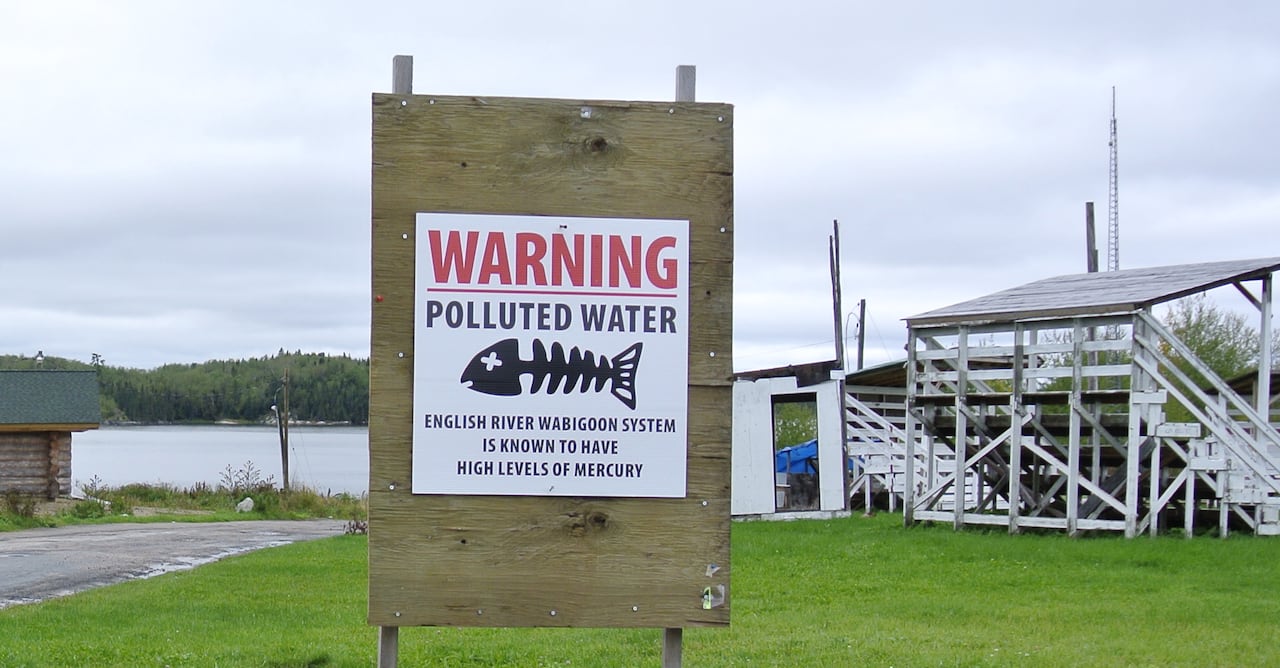
A 2024 study found levels of methylmercury in the Wabigoon River’s fish may be twice as high as they would have been without discharge from the Dryden Paper Mill. (Jody Porter/CBC)
She noted that the community is experiencing a “life and death situation,” with at least two ambulance calls each day for individuals requiring medical care.
“My people are suffering greatly, and the Canadian society is unaware of the devastating effects we face due to mercury poisoning, including the loss of our loved ones,” she stated.
Da Silva also mentioned that the community is already facing a youth suicide crisis, and it is disheartening for the youth to witness the Prime Minister laughing at one of their own.
She expressed a desire for the young people in her community to understand that they are not alone and that others care about their well-being.
First Nation deserves respect: NDP MP
NDP MP Leah Gazan stated in a media statement that she is “appalled” by Carney’s behavior.
“Is the health and welfare of Indigenous peoples not a matter of national importance? Is the voice of a woman enduring mercury poisoning not deserving of respect? Is safeguarding our lands and waters not essential to our identity as a nation?” she wrote.
“Grassy Narrows deserves justice. It deserves clean water. It deserves full accountability from governments that have long failed to fulfill their responsibilities.”
Former Prime Minister Justin Trudeau made comparable comments after a supporter of Grassy Narrows interrupted a 2019 Liberal party fundraiser.
-
‘We’re acknowledging it’ Grassy Narrows chief says of Trudeau’s apology over remarks to protester
-
Protesters attempt to disrupt Ford PC convention speech with questions about Grassy Narrows compensation
When the woman interrupted the fundraiser to voice concerns about the “mercury crisis” and the suffering of her community, Trudeau acknowledged her for her “donation.”
He later offered an apology, stating that he “disrespected them.”
