


A council member in Cork, Ireland is pushing for the installation of a public statue depicting a mosquito.
This proposed statue would not represent just any mosquito, but the particular insect that some people in Cork believe bit the English leader, Oliver Cromwell, causing him to fall ill and eventually succumb to what was then referred to as “Cork fever,” an old term for malaria.
If approved, this statue would likely be the smallest public monument globally, according to Green Party council member Oliver Moran, who shared his plan with guest host Nora Young on As It Happens. Moran is suggesting placing this petite statue on an empty pedestal outside Cork City Hall, among other potential locations he is considering.
Recognizing the controversial nature of Cromwell’s legacy, Moran acknowledges that opinions on the historical figure vary depending on whether one is from Ireland or England. In Ireland, Cromwell is remembered for the harsh military campaigns of the 17th century that resulted in the deaths of hundreds of thousands as England sought to assert control over the country.
Given Cromwell’s contentious reputation in Ireland, Moran believes that commemorating the supposed mosquito assassin may resonate with many people.
Moran explained his motivation for honoring this tiny insect in a conversation with Young:
What inspired you to propose a statue honoring a mosquito?
The idea emerged from a social media discussion where individuals, often studying Cromwell from an English viewpoint, would inquire about Irish perspectives on the historical figure. During one such exchange, a comment suggested that it was surprising Cork had not erected a statue commemorating the mosquito that allegedly caused Cromwell’s demise. This sparked Moran’s interest in creating a public monument based on the concept.
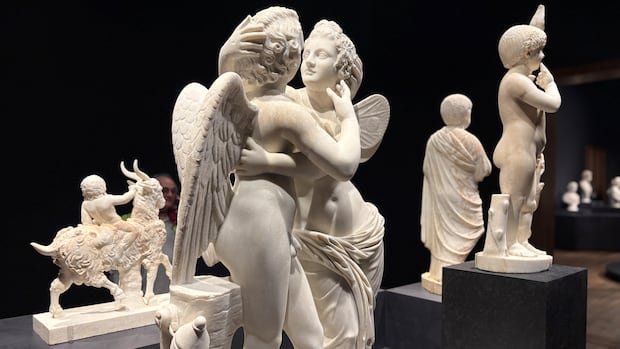
In the 19th century, Italian prince, banker and collector Alessandro Torlonia, gathered 623 ancient Roman sculptures. After being shown at the Louvre in Paris, the Torlonia Collection has touched down in Montreal, where it will remain on view at the Museum of Fine Arts until July 19.
Some individuals may not be familiar with Oliver Cromwell, and others may have learned about him as a heroic figure who contributed to the establishment of democracy and parliamentary authority in England. How is Oliver Cromwell perceived in your community?
There exist contrasting viewpoints on Cromwell across the Irish Sea. While a statue of Cromwell stands outside the British Parliament, the knowledge about him among the visitors is limited. In Ireland, the memory of Cromwell is tarnished by the brutal campaigns that resulted in the deaths of hundreds of thousands of people, representing a significant portion of the population at the time.
How do you envision the appearance of the proposed statue?
The concept is still in its infancy, and various location options are being
