



Ukrainian skeleton competitor Vladyslav Heraskevych resumed his training session on Wednesday wearing his prohibited helmet, a day before his scheduled race at the Milan Cortina Games, despite the International Olympic Committee’s recommendation to express his message differently.
Heraskevych arrived at the Olympics with a specially designed helmet featuring portraits of over 20 Ukrainian athletes and coaches who lost their lives in the conflict with Russia that erupted shortly after the 2022 Beijing Games.
However, the IOC declared on Monday night that the helmet would not be allowed during competition due to regulations prohibiting political statements on the Olympic field. Despite this ruling, Heraskevych persisted in wearing the helmet during his training sessions on Tuesday and Wednesday, fully aware that the IOC could prevent him from participating in the Olympic race.
“The helmet is compliant with all IOC regulations,” stated Heraskevych.
The IOC maintained its stance and expressed intentions to have a discussion with Heraskevych on Wednesday to outline acceptable alternatives, as per spokesperson Mark Adams. The timing of this conversation was uncertain, as it was announced approximately an hour before Heraskevych’s training session on Wednesday.
“We will emphasize the numerous platforms available to him to express his sorrow,” Adams explained. “As previously discussed, he can do so through social media and press conferences in the mixed zone. Therefore, we will engage in dialogue with him on this matter and attempt to persuade him.
“We are eager for him to compete. It is crucial for us that he gets his moment. It is essential for all athletes to have their moment, ensuring a fair and equitable playing field for everyone.”
Several Ukrainian athletes have shown solidarity with Heraskevych in their own ways.
“Remembering is not a violation,” inscribed Ukrainian luge athlete Olena Smaha on her glove during the final two runs of the women’s luge event on Tuesday night, directly referencing the helmet controversy. Similarly, Ukrainian skier Dmytro Shepiuk displayed “UKR heroes with us” on his right glove immediately after finishing the men’s super-G race on Wednesday in support of Heraskevych.
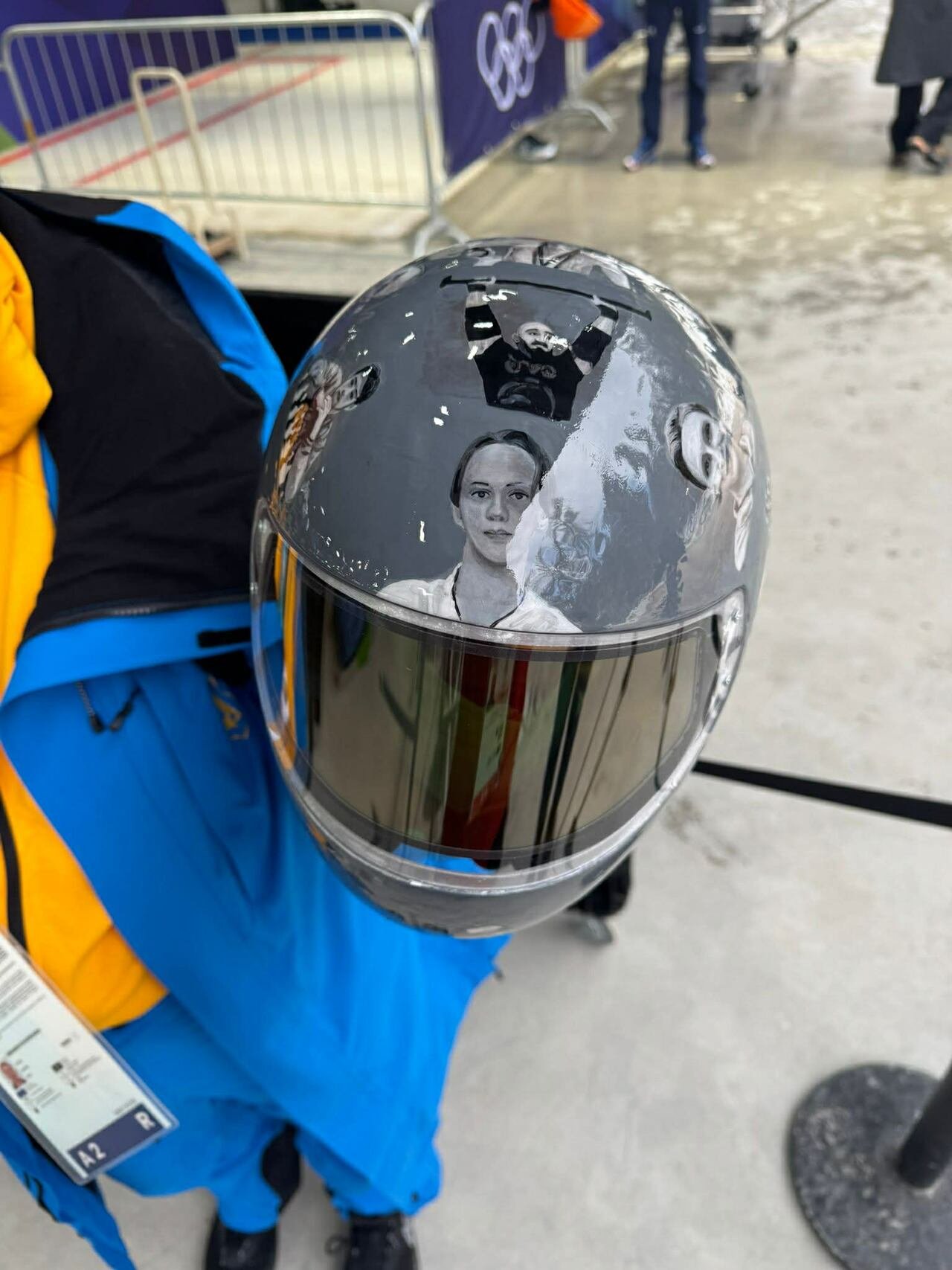
The helmet was crafted by a Ukrainian artist a few weeks ago, and Heraskevych argues that it should be permitted, pointing out that athletes have been allowed to pay tribute to others at the conclusion of their events.
For instance, U.S. figure skater Maxim Naumov brought a photograph of his deceased parents, former pairs world champions Evgenia Sh
