A third archaeological field school is set to take place this spring and summer at the Tse’k’wa National Historic Site, situated approximately 12 kilometres northwest of Fort St. John, B.C.
As one of over 57,000 documented archaeological sites in the province, Tse’k’wa provides a glimpse into 12,500 years of human habitation and environmental transformations, dating back to the last ice age.
This site holds sacred significance for the Doig River, Prophet River, and West Moberly First Nations, whose Dane-zaa ancestors have lived in the area for countless generations.
“The site reveals numerous remarkable archaeological discoveries that corroborate the Dane-zaa oral traditions, affirming their presence here since time immemorial,” remarked Alyssa Currie, executive director of the Tse’k’wa Heritage Society.
“We are committed to educating others about and celebrating the Dane-zaa heritage of this site, which has preserved their culture and continues to flourish.”
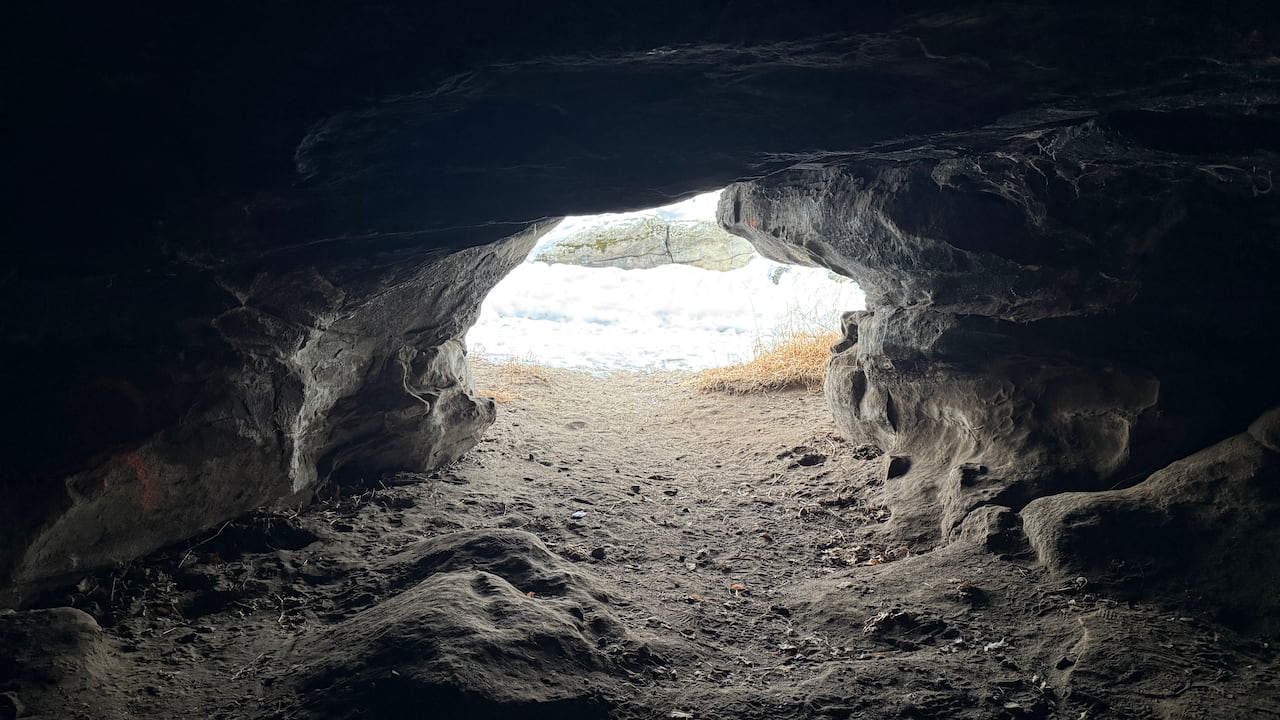
The interior of Tse’k’wa. The cave is large enough to stand in and it’s theorized it may have served as food storage in addition to its spiritual significance to the Dane-zaa people. (Tom Summer/CBC News)
The three nations established the society to maintain the site as an interpretive center for cultural education and community events, acquiring the land in 2012.
Field schools were previously conducted in 2022 and 2024, reviving archaeological and anthropological efforts that began several decades ago.
Participants from Doig River, Prophet River, and West Moberly join students in these schools, fostering a connection to their nations’ historical narratives.
The upcoming field school in 2026 will be the last for the time being, as their current permit is about to expire.
Exploring archaeology
A public lecture about Tse’k’wa was co-hosted on January 22 by Farid Rahemtulla, a professor of anthropology at the University of Northern British Columbia, and experienced archaeologist Richard Gilbert.
Gilbert was one of the initial archaeologists to investigate the site during excavations conducted in the 1980s and 90s by Simon Fraser University, alongside his colleagues Jon Driver and Knut Fladmark.
“The narrative of Tse’k’wa and its people belongs to the First Nations; it is their story,” stated Gilbert. “I am eager to assist in sharing that story in any way I can.”
“This represents a unique opportunity—a once-in-a-lifetime chance—to engage in a lengthy and significant research project.”
He first learned of the cave in 1974 while conducting archaeological surveys for the Peace Canyon Dam, noting that the region contains thousands of sites bearing traces of early human activity.
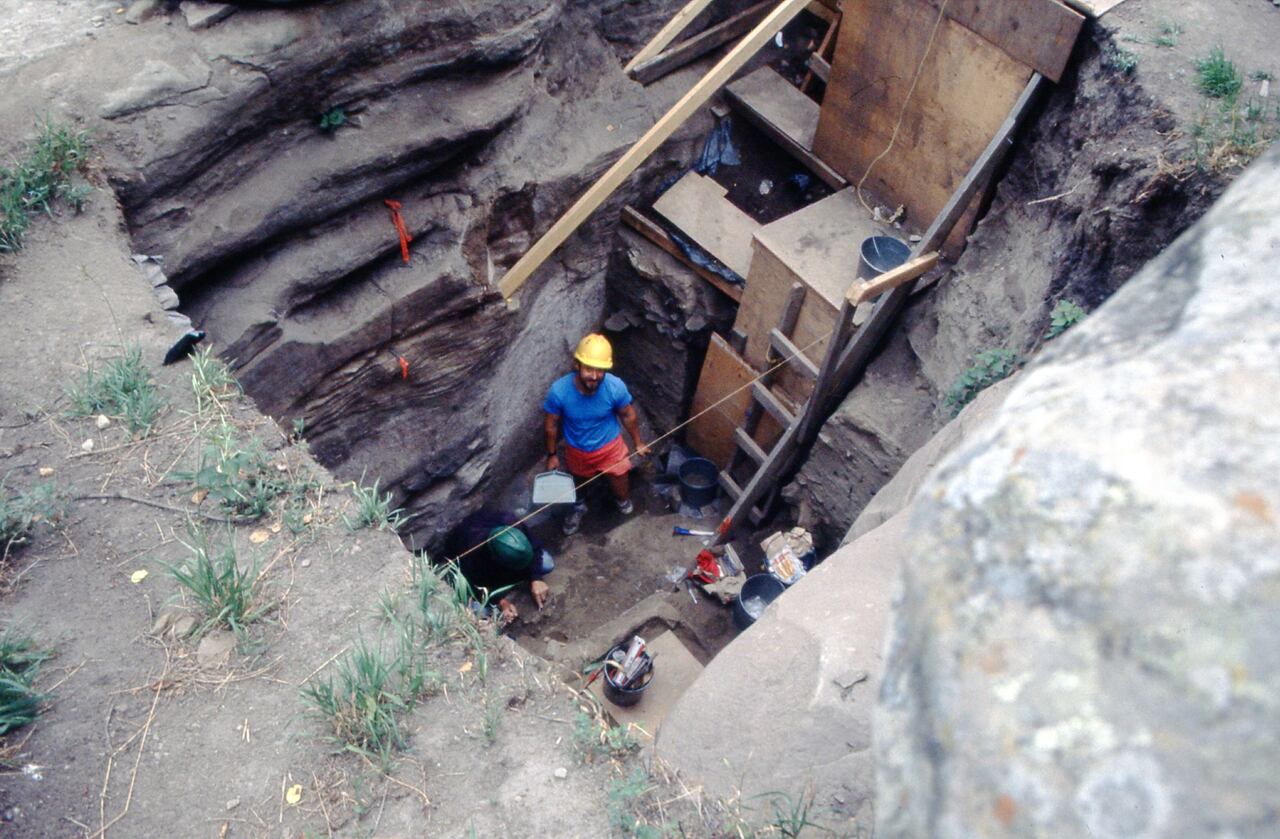
A view of the excavations in 1991, captured by Simon Fraser University archaeologist Jon Driver. A specialist in bones, Driver was initially invited to study the site in 1983 by his colleague Knut Fladmark. (Submitted by Tse’k’wa Digital Archive.)
The soil layers at the site remain largely untouched, enabling researchers to uncover a wealth of evidence, including stone tools, ancient animal bones, and shards of obsidian.
The Dane-zaa people would have witnessed the long-extinct giant bison traversing the Peace valley, as the landscape evolved from grassland to boreal forest following the retreat of a glacial lake.
According to Gilbert, obsidian likely traveled to the Peace area from the Chilcotin region via trade networks.
A stone bead discovered at Tse’k’wa is estimated to be 10,500 years old, making it the oldest instance of human adornment found north of the Yucatán Peninsula.
“While it may not seem significant visually, non-utilitarian artifacts are quite rare,” Gilbert noted. “It truly broadened everyone’s perspective on what was present there.”
It is believed that the site also served a ritualistic function.
Two ravens were interred at the same location, separated by a thousand years. Ravens hold spiritual importance in many Indigenous cultures, and Gilbert observes that these birds were buried with careful intention.
“This adds another dimension to the site,” he commented. “It was not merely a casual location; it likely held considerable spiritual significance.”
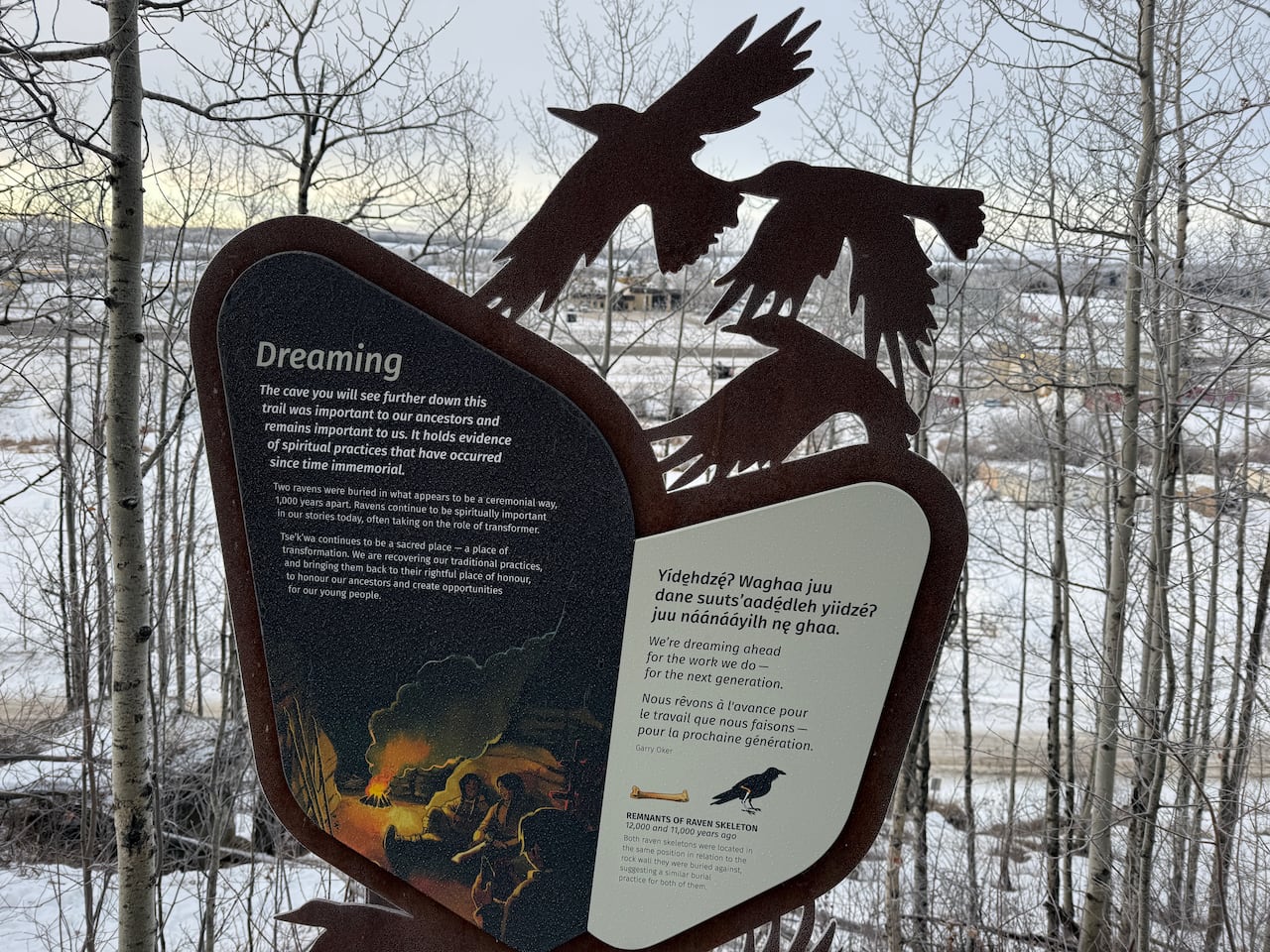
A sign commemorates the two raven skeletons buried a millennium apart. These remains date back over 11,000 years, highlighting the spiritual significance of the site for Indigenous Peoples who frequented Tse’k’wa. (Tom Summer/CBC News)
Subscribe to CBC’s Fort St. John Weekly for a roundup of the best news and stories from B.C.’s Peace and Northern Rockies.