

Amnesty International has accused M23 rebels operating in the eastern Democratic Republic of Congo of committing abuses and unlawful executions of miners while trafficking essential minerals to Rwanda, potentially constituting war crimes.
The rebels, supported by Rwanda, control numerous artisanal mines in the North Kivu and South Kivu provinces of D.R.C., where tens of thousands of miners extract minerals vital for global electronics, including mobile devices.
In a report released on Monday, Amnesty International stated that it interviewed 26 individuals to document alleged crimes occurring from January 2025 to March 2026, focusing particularly on a coltan mine near Rubaya in North Kivu and a gold mine in Lomera in South Kivu.
The report indicated that 16 of the interviewees, consisting of miners and local civilians, claimed to have been tortured or mistreated by either the M23 rebels or the security personnel at the mines they control.
The human rights organization noted that it had recorded abuses by the rebels that likely qualify as violations of international law, including “summary killings,” which refer to executions carried out without legal process, along with torture, arbitrary detention, forced labor, and theft.
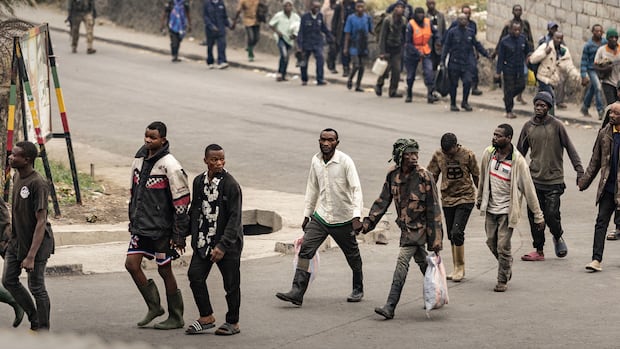
Reports of desperation, looting, and corpses in the streets have emerged from Goma, following claims by Rwanda-backed M23 rebels of having taken control of the Congolese city. This development marks the latest chapter in years of conflict in the mineral-rich eastern region.
The report outlined the deaths of 18 artisanal miners at the Rubaya and Lomera mines.
“Witnesses and relatives have indicated that 10 miners were beaten to death, two were shot, and six abducted miners were later discovered deceased,” the report stated.
Amnesty International also reported finding evidence of gold being smuggled out of the M23-controlled regions of eastern D.R.C. into Rwanda via illicit routes.
There was no immediate response from either the M23 or Rwandan authorities regarding these allegations.
Experts from the United Nations, as well as the U.S. and D.R.C. governments, have previously accused Rwanda of profiting from D.R.C.’s mineral resources in exchange for its backing of the rebels, a claim that Rwanda has denied.
-
89 civilians killed in Islamic State-linked rebel attacks in east Congo: UN force
-
Rwanda-backed M23 rebels say they’ve seized strategic city of Uvira in east Congo
The eastern regions of D.R.C., rich in minerals, have endured decades of violence from government forces and various armed factions, including M23, whose recent resurgence has intensified the conflict and exacerbated an already critical humanitarian situation.
The Rubaya mine is a significant coltan extraction site that has witnessed multiple tragedies, such as a mine collapse in March that claimed at least 200 lives, and a landslide in January that resulted in approximately 200 fatalities.
The Lomera gold mine also experienced a collapse last year, trapping a number of miners.
In the previous year, D.R.C. accounted for over half of the global tantalum production, an ore sourced from coltan utilized in smartphones and other devices, with the Rubaya mine contributing about 15 percent of global output, as reported by Amnesty International.
Additionally, the country exported more than 28 tons of gold during the same period, according to the organization.

