

Despite the ongoing Chinese tariffs on Canadian pork, Finance Minister François-Philippe Champagne asserts that the primary focus should be on fostering relationships, emphasizing that quick resolutions are unlikely.
“You can’t anticipate solving everything in a single meeting,” Champagne mentioned to CBC News on Friday as his visit to Beijing concluded. “It’s about planting seeds and engaging.”
Canadian pork is still subject to a 25 percent surtax, a consequence of Ottawa’s decision to mirror Washington’s implementation of a 100 percent tariff on Chinese electric vehicles.
The Chinese authorities also placed tariffs on various agricultural goods such as canola meal. However, earlier this year, the Canadian government reached an agreement that permits 49,000 Chinese electric vehicles to enter Canada at a lower tariff rate, in exchange for China easing or eliminating its agricultural tariffs.
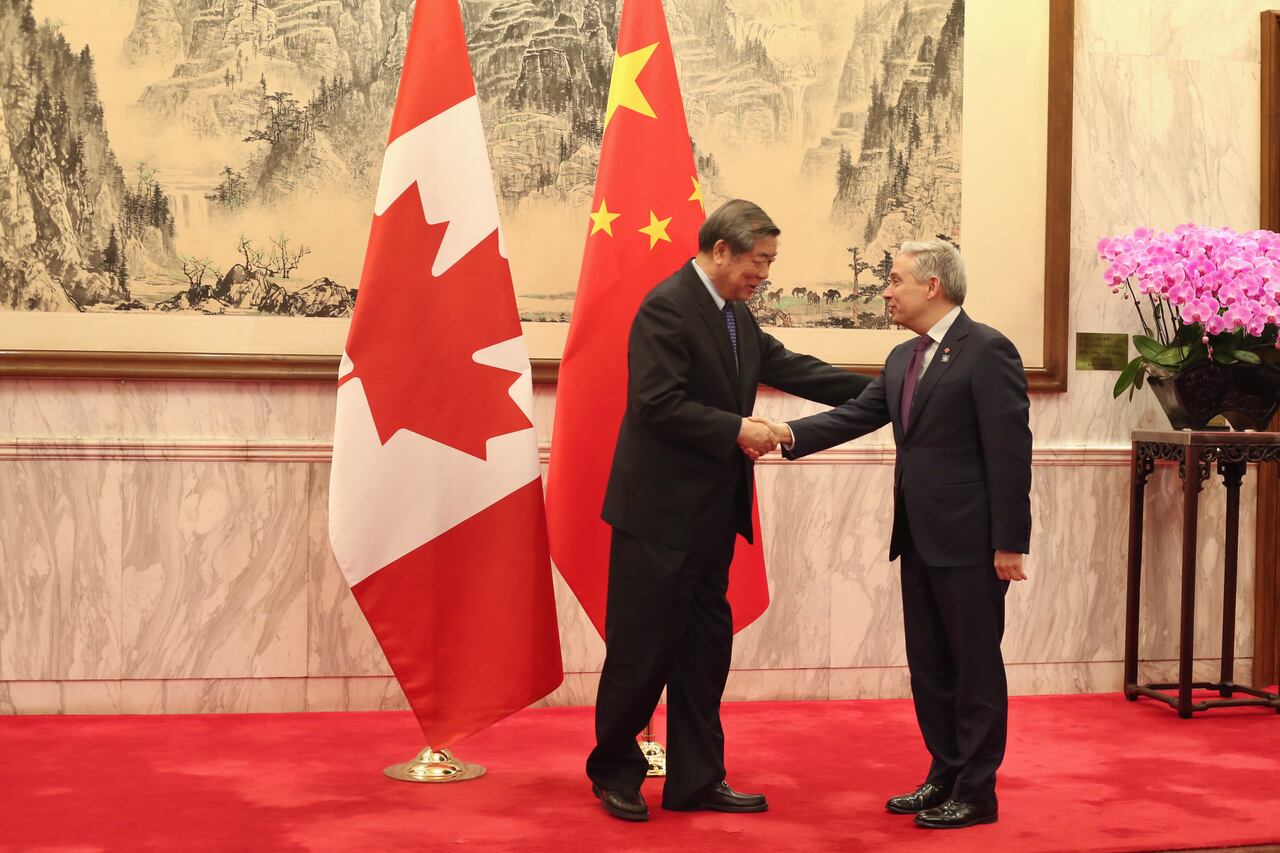
He Lifeng, the vice-premier of the People’s Republic of China (left), shakes hands with Canada’s Finance Minister François-Philippe Champagne during their bilateral meeting in Beijing on April 3, 2026. (Lisa Xing/CBC)
Champagne recognized the trade friction regarding pork and acknowledged other unresolved matters, including seafood. Nonetheless, he highlighted a broader vision shared by the Canadian and Chinese governments aimed at closer collaboration when mutual interests arise.
“Essentially, my purpose here was to translate the vision of [Prime Minister Mark Carney] into concrete actions,” Champagne stated. “However, anyone experienced in business in this region would understand the necessity of relationship-building. This is not just a transactional affair.”
“You can’t expect to increase trade without making an appearance. Showing up is half the effort,” Champagne remarked.
Emphasis on financial services
During an earlier press briefing on Friday, Champagne revealed he met with Chinese Finance Minister Lan Fo’an and Vice-Premier He Lifeng to discuss opportunities for the Canadian financial services sector to expand its presence in China.
This initiative involves Canadian banks obtaining additional licenses to provide a broader array of services in China and enhancing access to bond markets, he explained.
“To boost your trade, financial services are essential. You need to offer the necessary services to exporters eager to expand in the Chinese market,” Champagne asserted.
The minister also anticipated Lifeng’s upcoming visit to Canada in the near future.
-
Canada’s finance minister aims to shore up support, investment in China
-
Top Canadian bankers join finance minister on Chinese trade mission
Champagne further mentioned that he addressed Canada’s position on human rights and the importance of supply chain integrity. This comes after Liberal MP Michael Ma raised questions regarding the presence of forced labor in China during a parliamentary committee last week.
“We discussed supply chain integrity. That was a central point I communicated to our Chinese counterparts — emphasizing that Canada places significant importance on supply chain integrity and that our bilateral trade must adhere to international standards,” Champagne informed journalists.
In an interview with CBC News, the finance minister stated he was “very clear about our position on these matters.”
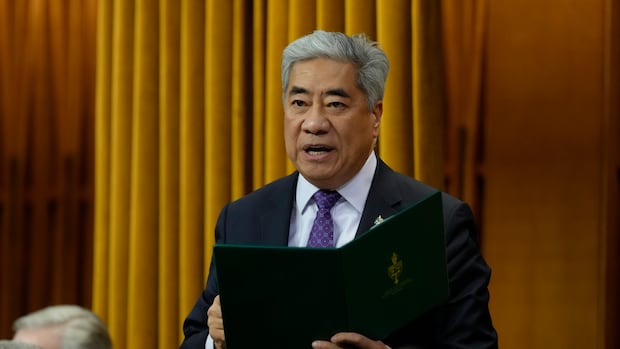
During a parliamentary committee on Thursday, Liberal MP Michael Ma questioned Margaret McCuaig-Johnston of the China Strategic Risks Institute about her observations of forced labor in China. ‘I work closely with Human Rights Watch where researchers did witness it,’ McCuaig-Johnston responded. Correction: The original video description mistakenly indicated Michael Ma inquired about forced labor in Xinjiang, China; he was actually referring to Shenzhen.
While Champagne did not elaborate on how the Chinese officials received his message, he stated they “understood my perspective well, and I suspect they may have reviewed the media coverage in Canada prior to my visit.”
Ma later apologized, clarifying that he intended to discuss forced labor in Shenzhen, home to most of China’s electric vehicle manufacturing, rather than Xinjiang, where widespread human rights abuses against Uyghurs have been reported.
On Monday, Carney defended Canada’s initiatives to prevent products produced with forced labor from entering the supply chain, asserting that the country “maintains the strictest engagement on this issue.”
“Mr. Ma has acknowledged his misstep, as he should have,” Carney remarked. “He has recognized the gravity of the situation in his apology.”

