

In 2026, Russia’s oil shipments via the Northern Sea Route (NSR) have already surpassed last year’s figures by nearly 50%, with approximately 20 million barrels transported to Asia from the beginning of navigation in July through mid-October, according to traders and data reports.
The NSR connects Russia’s western ports to Asian markets through the frigid Arctic waters, which is regarded as a riskier and more costly passage. However, this year, it has become a more appealing option due to disruptions in the Suez Canal, the Strait of Hormuz, and the Black Sea, traders noted.
Tanker rates have skyrocketed to unprecedented levels as conflicts in Iran and Ukraine have fueled inflation and made U.S. crude oil unavailable for Asian refiners, prompting them to look for alternatives from the Middle East and Latin America.
This shift has made the high fees for vessels utilizing the NSR, which necessitates icebreaker support, comparatively cheaper than the traditional route to Asia via the Red Sea, according to traders.
For Russia, which oversees the NSR, it provides a reliable alternative to European waters, where tankers carrying its oil have frequently been detained this year.
Preliminary estimates from traders suggest that the amount of Russian oil exported through the Arctic route could increase by an additional five to ten million barrels by the conclusion of the navigation season.
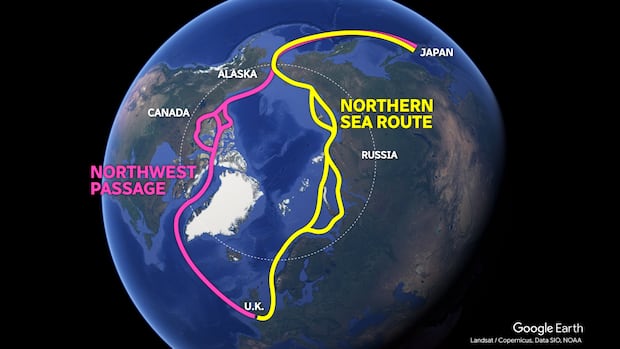
The Arctic is rapidly emerging as a key geopolitical hotspot as melting ice opens new shipping routes. Andrew Chang breaks down North America’s shifting Arctic defence strategy as competition with Russia and China intensifies, and the implications for the future of the region.
During the previous navigation season, Russia exported 13 million barrels. Gazprom Neft, one of the country’s leading oil firms, plans to boost its shipments via the NSR by around 35% this year compared to 2025, as stated by CEO Alexander Dyukov to reporters in Moscow on Friday.
Additionally, Russia provides considerable amounts of liquefied natural gas (LNG) to Asia through the NSR, along with other commodities. The LNG exports through the NSR are also projected to increase this year following the commencement of Arctic LNG shipments.
In September, President Vladimir Putin expressed at an economic forum in Vladivostok that Russia anticipates cargo turnover via the NSR to double to 70 million tonnes annually by the decade’s end.
Rosneft’s massive new oil initiative in northern Russia, Vostok Oil, which was launched last month, is already aiding in the increase of volumes utilizing the NSR.

