

WARNING: This article contains details about violence against children and attempted suicide.
A lawyer representing Lindsay Clancy has requested a judge to look into the actions of the sole juror who aimed to convict the Massachusetts mother of murder for the deaths of her three young children.
In a motion submitted on Friday and made public on Monday, Clancy’s attorney sought to have juror Michael Desronvil questioned regarding his purported use of a cellphone during jury deliberations, his honesty on a questionnaire completed by prospective jurors before the trial commenced, and his veracity when jurors were queried by the judge a day before the trial concluded.
Among other requests, attorney Kevin Reddington urged the court to acquire any records of calls or texts Desronvil may have sent between 8 a.m. and 4:30 p.m. on each day the jury was deliberating, as using phones during deliberations is prohibited in the state.
Reddington is pushing for this motion to be addressed at the next scheduled hearing on September 29.
Mistrial Was Declared
The judge declared a mistrial on September 4 after the jury stated that they could not reach a unanimous decision, despite several days of deliberation. Eleven out of the twelve jurors believed Clancy should be found not criminally responsible, with many feeling she was suffering from a rare condition known as postpartum psychosis when she harmed her children.
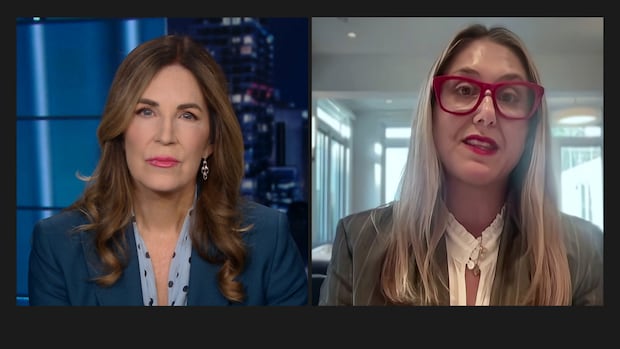
The National’s Erica Johnson asks attorney and professor Margo Lindauer to break down why a mistrial was declared in the Lindsay Clancy case and what could happen next.
However, Desronvil aligned with the prosecution, which contended that Clancy was aware of her actions.
“I had no doubts,” Desronvil stated in a communication posted on the social media platform X by his attorney, Edward Paltzik.
The jury’s foreperson previously claimed in a media interview that Desronvil had confessed to having “reasonable doubt” regarding Clancy’s guilt but still wished to convict her. Desronvil refuted this assertion.
“While I attempted to explain various potential theories during deliberations, I was repeatedly interrupted as if I had doubts concerning the evidence provided,” he explained. “Based on all the physical evidence, key testimonies, and what the prosecution presented, I believed it was sufficient proof that [Clancy] was fully aware of her actions.”
Juror Has Not Been Accused of Misconduct
Desronvil has not faced any allegations of improper conduct related to his jury service, although other jurors expressed that he was rigid in his belief that Clancy was guilty.
Since the conclusion of the trial, Desronvil has experienced both acclaim and criticism for his stance, and his personal life, along with previous financial and legal issues, has been the subject of media scrutiny and public interest.
Among the public disclosures: He was under a restraining order during jury selection and was facing eviction from his apartment due to over $12,000 US in unpaid rent. Additionally, he had faced domestic violence allegations in 2021, which were later dropped.
Conversely, he has gained support from individuals who believe Clancy should be found guilty. A fundraiser aimed at covering what organizers describe as expenses for “security, lawyers, and lost work” for Desronvil has collected nearly $375,000 US.
Uncertainty Surrounds a Potential Retrial for Clancy
Prosecutors have not yet indicated whether they intend to retry Clancy. She continues to face murder charges and is currently in a psychiatric facility until her case is resolved.
In a separate motion submitted on Monday, another attorney for Clancy, Martin Weinberg, urged the judge to take the unusual measure of dismissing the criminal case instead of proceeding with a new trial, asserting that the mistrial should not have been declared in the first place.
Weinberg contended that the judge should have substituted the holdout juror with an alternate during deliberations after the jury foreperson informed the judge that one juror was unwilling to consider the law on reasonable doubt.
“Contrary to the court’s previous belief, there were viable alternatives to declaring a mistrial,” Weinberg stated.
This follows a prior motion filed by Clancy’s legal team, arguing that she should not face a second trial due to a lack of sufficient evidence from the prosecution.
According to Massachusetts law, prosecutors must establish either that Clancy did not suffer from a mental illness or defect or that, despite having one, she had the capacity to understand her actions when she strangled her children.
Reddington maintained in a court filing on Thursday that the prosecution failed to prove either point.
A spokesperson for Plymouth County District Attorney Timothy Cruz declined to comment on the motions.
If you or someone you know is struggling, here’s where to look for help:
- Canada’s Suicide Crisis Helpline: Call or text 988.
- Provincial and territorial mental health support.
- Kids Help Phone: 1-800-668-6868. Text 686868. Live chat counselling on the website.
- This guide from the Centre for Addiction and Mental Health outlines how to talk about suicide with someone you’re worried about.

