


Confidential documents recently disclosed by the U.K. government reveal Queen Elizabeth’s strong support in 2000 for Andrew Mountbatten-Windsor, the former prince, to assume the role of U.K. trade envoy.
Following a parliamentary decision in February, the government released the papers linked to Andrew’s appointment, amidst ongoing allegations of his involvement with convicted sex offender Jeffrey Epstein during his tenure as trade envoy from 2001 to 2011.
A 2000 letter from Britain’s trade body head stated, “The Queen is very keen that the Duke of York should take on a prominent role in the promotion of national interests,” addressing Andrew by his alternate title.
Another document, a government memo distributed to U.K. trade personnel globally, emphasized the necessity for careful media management due to Andrew’s “high public profile.”
Trade Minister Chris Bryant informed lawmakers in a written statement that no formal due diligence or vetting process took place before Andrew’s appointment, citing the royal family’s historical involvement in trade and investment promotion as the rationale.
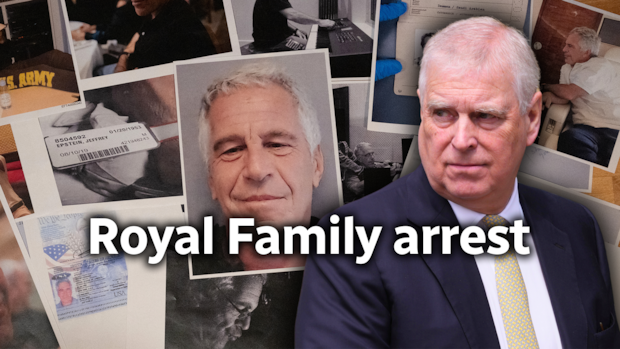
Andrew Mountbatten-Windsor, the former prince and brother of King Charles, was arrested by police in England on suspicion of misconduct in public office. Allegations linking Andrew to sex offender Jeffrey Epstein are explained by Andrew Chang.
Images by The Canadian Press, Reuters, and Getty Images
Earlier this year, Andrew became the first member of the Royal Family in over three centuries to face arrest during questioning regarding alleged misconduct in public office.
Queen’s Involvement and Andrew’s Title Stripped
The disclosure of Queen Elizabeth’s inclination, who passed away in 2022, suggests a personal bias towards her son, Andrew, potentially influencing her handling of the Epstein friendship allegations, which first surfaced in the media in 2011.
Craig Prescott, an expert on constitutional law and the monarchy at Royal Holloway, University of London, noted that the documents indicate Elizabeth’s concern for Andrew’s well-being, indicating her directive as final without room for debate.
Last year, King Charles stripped Andrew of his royal title to protect the monarchy from the repercussions of the Epstein scandal. Calls from Canada and Australia have urged Andrew’s removal from the royal line of succession.
Following sanctions, Andrew relocated to the King’s private Sandringham Estate, situated approximately 160 kilometers north of London. In recent events, Andrew encountered an incident where he was approached by an individual while accompanied by a security team, leading to the individual’s subsequent arrest.
Andrew served as a special envoy for international trade from 2001 to 2011 but relinquished the position due to concerns over his associations with questionable figures in Libya and Azerbaijan.
- <a class="similarLink" href="https://www.cbc.ca/news/politics/removing-andrew-line-of-succession
