

Patrick Cummins once witnessed a cougar traverse his backyard, ascend his deck, and walk along the roof of his house.
Living near Bergen, Alberta, Cummins didn’t actually see the cougar; he only noticed its paw prints in the snow.
In his 51 years residing on the property, Cummins has yet to see a cougar in person, although he has captured images of these elusive animals on trail cameras.
“We were always aware that cougars were in the area,” Cummins remarked. “I guess we were somewhat vigilant, but they have never posed a threat to anyone around here to my knowledge.”
However, tracks can expose a previously hidden predator to danger.
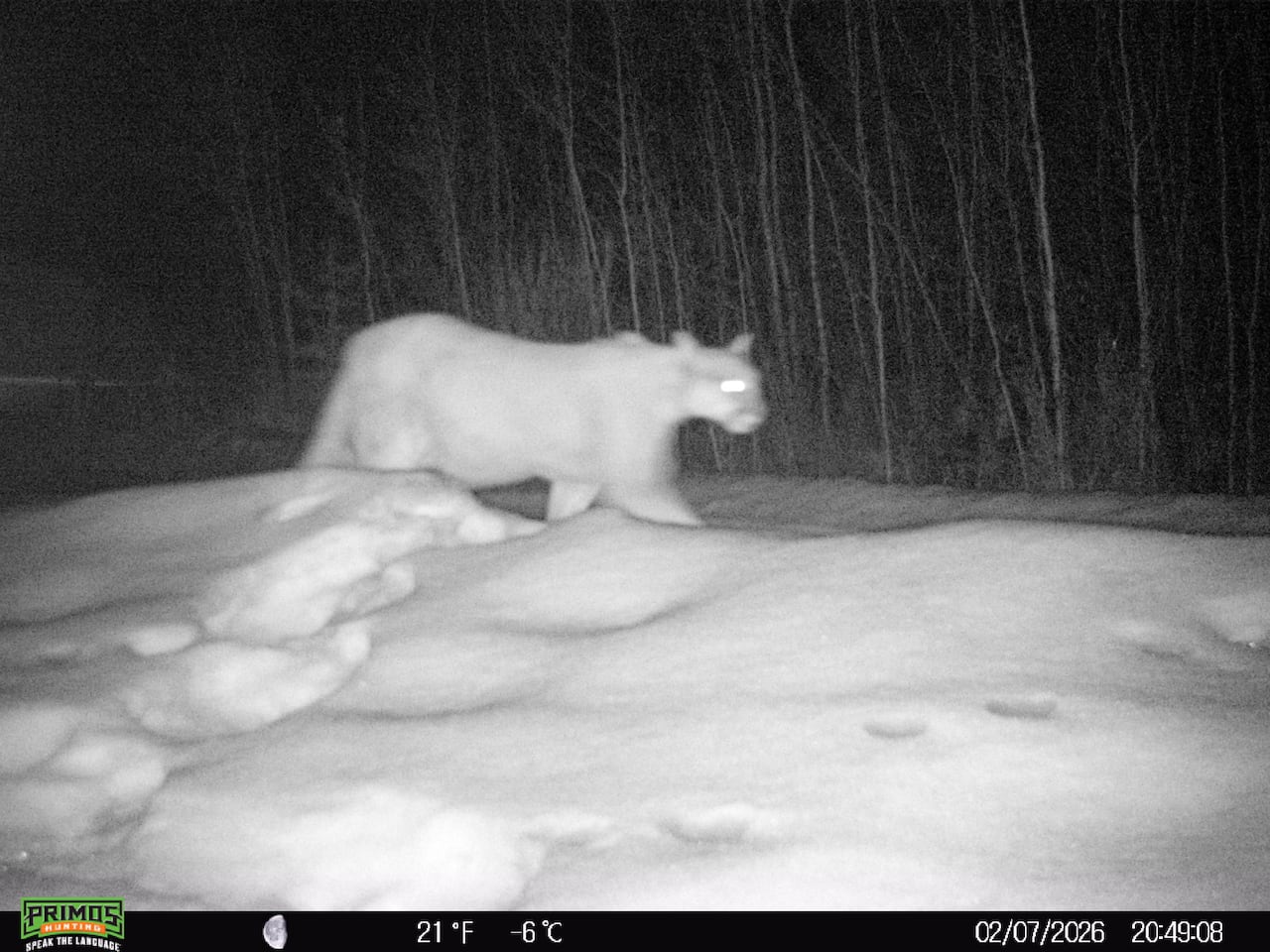
A cougar traverses Patrick Cummins’s land near Bergen, Alberta, on February 7. Recent research investigates how human development influences cougar survival in west-central Alberta. (Submitted by Patrick Cummins)
Recent studies conducted in west-central Alberta indicate that roadways, residential areas, and other human-created pathways that intersect cougar habitats may not only influence the movements of these animals but also impact their survival rates.
Over five years, researchers monitored 80 GPS-collared cougars and discovered that the risk of mortality increased significantly when the animals were near homes and secondary roads, as well as when they frequently crossed human-made clearings.
Of the 37 recorded deaths, 29 were attributed to human actions.
“This is primarily about accessibility for hunters,” explained Carter Littlefair, the study’s lead author, whose findings were published on Wednesday in PLOS One.
Littlefair, who completed this research as a graduate student at the University of Alberta, explained that secondary roads facilitate easier access for hunters into cougar territories. Clearings can also indicate the paths the animals have taken.
“When a cougar crosses the road, it leaves behind tracks.”
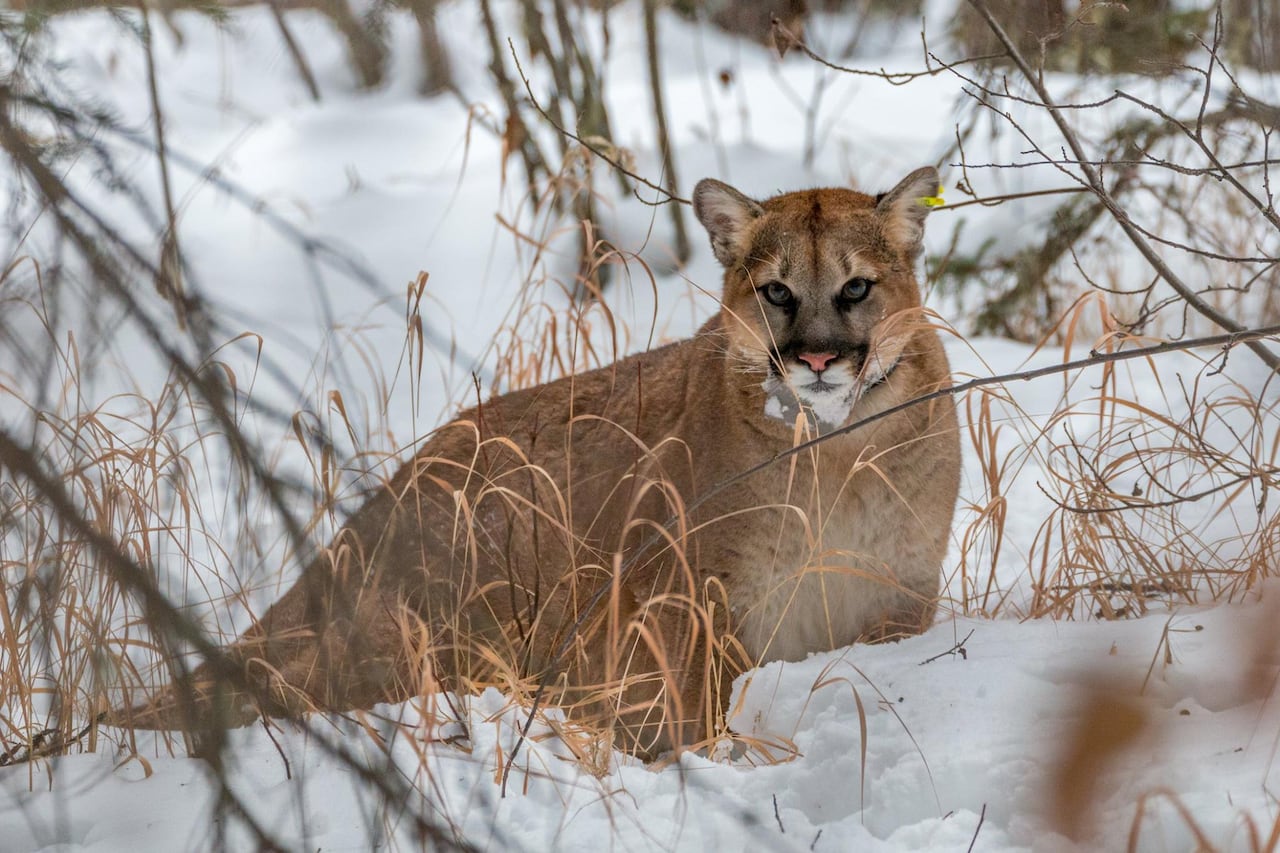
Cougars typically steer clear of paths frequented by humans, which is why the province aims to decrease trail density in vital wildlife habitats. (Submitted Delaney Frame/Alberta Environment and Parks)
Human impact connected to mortality risk
The study tracked cougars from 2016 to 2021 across an area that included secondary roads and human-made clearings, like seismic lines, powerline corridors, and railways.
Hunting emerged as the largest individual cause of death, responsible for 16 of the 37 cases. Additionally, eight cougars perished after being caught in traps meant for other species, while five others were victims of vehicle collisions or removals related to problematic animals or landowner actions.
The researchers also noted significant seasonal variations in survival rates. From April to October, the estimated survival rate was 96 percent, while it dropped to 62 percent from November to March.
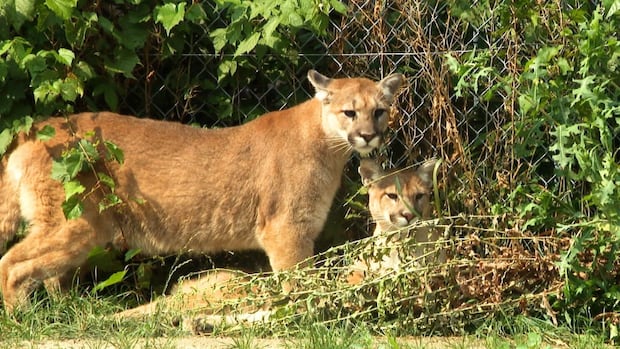
In Alberta, the cougar hunting season during the study commenced on December 1 each year and continued until the end of February or until the quotas were fulfilled.
The research indicated a connection between cougar mortality rates and human-made features, although it did not directly assess hunting activity. Littlefair noted that increased access for hunters and the likelihood of spotting cougars could elucidate this relationship.
Implications for the population
The researchers estimated an annual survival rate of approximately 60 percent, a figure that Littlefair stated aligns with other hunted cougar populations. He also mentioned that hunting represented a smaller proportion of mortality compared to some other studies.
According to Alberta Forestry and Parks, cougar mortality rates in the area studied were consistent with those found in other populations where hunting is allowed.
The department added that the study encompassed about 15 percent of Alberta’s cougar management areas at the time and advised caution against generalizing the findings across the province. They noted observing increases in cougar populations and expansions of their range throughout Alberta.
The study did not provide estimates for population size or reproduction, leaving researchers unable to determine if the population is increasing, stable, or declining.
-
Even low levels of backcountry recreation linked to fewer wolverines, study finds
-
Sask. survivor of crash with moose shares warning about road dangers from wildlife
Littlefair stated that the research sheds light on cougar mortality but does not provide conclusive evidence regarding whether they are dying at an unsustainable rate.
For Cummins, the human involvement in these deaths came as a surprise.
“Yes, that catches me off guard,” he admitted.
“There are more people in rural areas now than there used to be,” Cummins noted. “So in that regard, it could be a result of increased human activity in the wilderness.”

