


Ontario’s Premier Doug Ford remarked that while Conservative Leader Pierre Poilievre may have gained significant backing from his party in a recent leadership ballot, he emphasized that victories in elections are not determined within the confines of a convention hall.
At the Conservative party’s convention in Calgary last month, Poilievre garnered 87 percent of the delegates, surpassing the support received by former Prime Minister Stephen Harper during his own leadership review in 2005.
“Elections aren’t won at conventions; they are won across the nation. So let’s wait and see what unfolds if the prime minister decides to initiate an election,” Ford stated on Tuesday.
The tense relationship between Ford and Poilievre became evident during the last federal election when the premier declared he would not extend public support to any federal Conservative candidates contesting in Ontario.
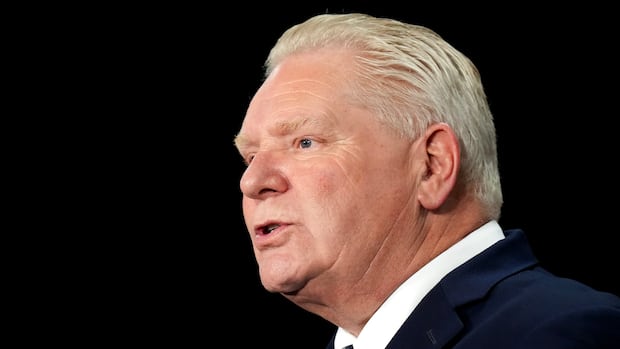
In a conversation with reporters on Tuesday, Premier Ford was questioned about a reported discussion he had with Prime Minister Mark Carney regarding a potential early election. Ford responded, “If they decide to call an election… it has nothing to do with me,” and he was also inquired about Conservative Leader Poilievre.
During the previous federal election campaign, Ford’s former campaign manager Kory Teneycke accused Poilievre’s team of “campaign malpractice” for not adequately responding to threats posed by U.S. President Donald Trump.
When asked about Teneycke’s comments at that time, Ford remarked “the truth hurts.”
Despite recent attempts to bridge the gap between the two leaders, Premier Ford, who has achieved three consecutive majority governments in Ontario, stated that he has not provided Poilievre with any political counsel.
‘I don’t divulge our conversations’
Ford confirmed he had a conversation with Prime Minister Mark Carney recently about the prospect of an early federal election, but he declined to share specifics.
“I don’t disclose our discussions, but I’ll be candid with you; when you gather 13 premiers in one room, political matters inevitably arise, and that was one of the topics,” Ford explained.
Last month, all 13 of Canada’s premiers convened in Ottawa, which included a meeting with Carney.
On Monday, the Globe and Mail reported that Ford, who has fostered a close rapport with Carney over the past year, discussed the need for the country to have the stability that comes with a majority government.
When asked on Tuesday for more details regarding that discussion, the Ontario premier stated that “there were only two individuals in the room, me and him,” and what was communicated will remain private between the two.
-
Premier wants Canada to ‘not buckle’ to Trump’s Windsor-Detroit bridge threat
-
Ford says ‘truth hurts’ when asked about criticism of federal Conservative campaign
-
Pierre Poilievre sails through leadership review as Conservatives deliver a strong endorsement
Ford indicated that the decision of whether to hold a spring election lies with Carney and his caucus, but he expressed a desire for “stability across the nation.”
“I have always maintained that I do not concern myself with political affiliations. I am willing to collaborate with anyone who has Ontario’s best interests at heart, be they from a Liberal federal government or an NDP mayor,” Ford stated.
Federal Conservatives are making efforts to mend Poilievre’s relationship with Ford and Nova Scotia Premier Tim Houston.
In a statement released last month, federal Conservative campaign manager Steve Outhouse expressed his belief that unifying conservatives is essential for success in the upcoming federal election.
“As someone from Atlantic Canada who has participated in campaigns nationwide, I hold great respect for all segments of our conservative voter coalition. Each segment possesses its strengths, and I look forward to collaborating with all factions of the conservative movement to secure victory in the next election — whenever that may occur,” he stated.
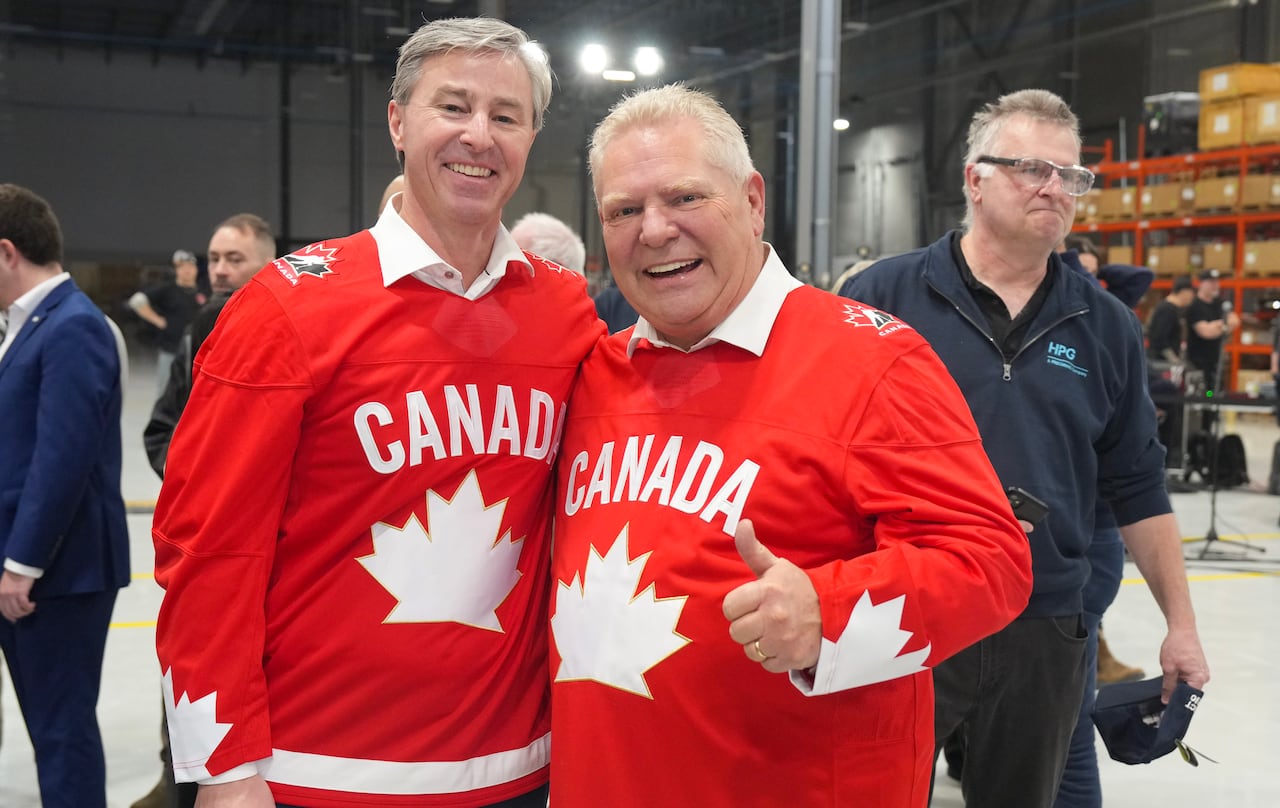
During the last Ontario election, Ford was introduced at a campaign event by a political ally, Nova Scotia Premier Tim Houston. (Chris Young/The Canadian Press)
Meanwhile, in Ottawa, sources informed CBC News on Monday that federal Liberals and Conservatives are exploring possible agreements to resolve parliamentary deadlock and potentially avert a second federal election within a year.
The Liberals under Carney remain three seats short of a majority, and the government has encountered difficulties in garnering support to advance their legislative agenda during the fall session.
However, this session might be different. Last Wednesday, Carney and Poilievre engaged in a private meeting. Following the meeting, the prime minister commented on social media, stating: “This is a crucial time to collaborate and pass the legislation that Canadians rely on.”
Poilievre mentioned that he advocated for reduced taxes, a smaller deficit, and “policies aimed at making Canada affordable, secure, and self-sufficient.”
