

In the 12 years since New Brunswick implemented a moratorium on shale gas exploration, many aspects have evolved.
However, one constant remains: the geological resources beneath us.
It is understood that shale gas is present in the rock formations beneath the surface.
According to the New Brunswick government, the province is home to approximately 77 trillion cubic feet of shale gas across two identified gas fields. By contrast, Alberta, a significantly larger province, boasts 3,455 trillion cubic feet.
In the southern part of New Brunswick, the McCully Field located near Sussex is estimated to contain around 67.3 trillion cubic feet of gas, while the Stoney Creek Field situated to the northeast near Hillsborough has an additional 10.9 trillion cubic feet.
What led to its formation?
The shale rock that has the potential to store gas is found extensively throughout the province, stretching from Bathurst down to Fredericton, and eastward to Sackville.
To understand the origins of the gas within the shale, we must travel back 350 million years to the Carboniferous period, a time when the landscape of what we now know as New Brunswick was vastly different.
“During that era, southern New Brunswick was characterized by a vast marine environment,” explained Denis Lavoie, a retired geologist who spent three decades with Natural Resources Canada.

Not every shale rock contains gas, and geologist Denis Lavoie noted that the shale in New Brunswick capable of holding gas is primarily located in the southeast. (CBC)
Lavoie stated that this expansive ocean was teeming with small life forms.
Upon their demise, these organisms settled on the ocean floor, forming layers that were eventually buried under hundreds of meters of rock over millions of years.
“The organic material is subsequently transformed into hydrocarbons due to rising temperatures,” Lavoie added.
In the context of New Brunswick, the desired hydrocarbon is natural gas.
What is the estimated amount?
Having established that shale gas exists within the shale, the next query is how much of this gas is actually trapped within it?
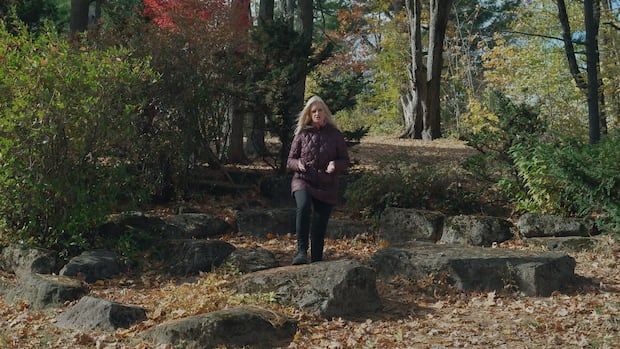
More than ten years since Brian Gallant’s Liberal administration initiated a moratorium on shale gas exploration in New Brunswick, a different Liberal government is contemplating its termination.
The straightforward answer, as per Dave Keighley, a professor in the Earth Sciences department at the University of New Brunswick in Fredericton, is that we lack definitive knowledge.
“The only way to find out is to excavate or drill,” Keighley remarked.
This does not imply that there have been no attempts to gather more data regarding the potential gas reserves.
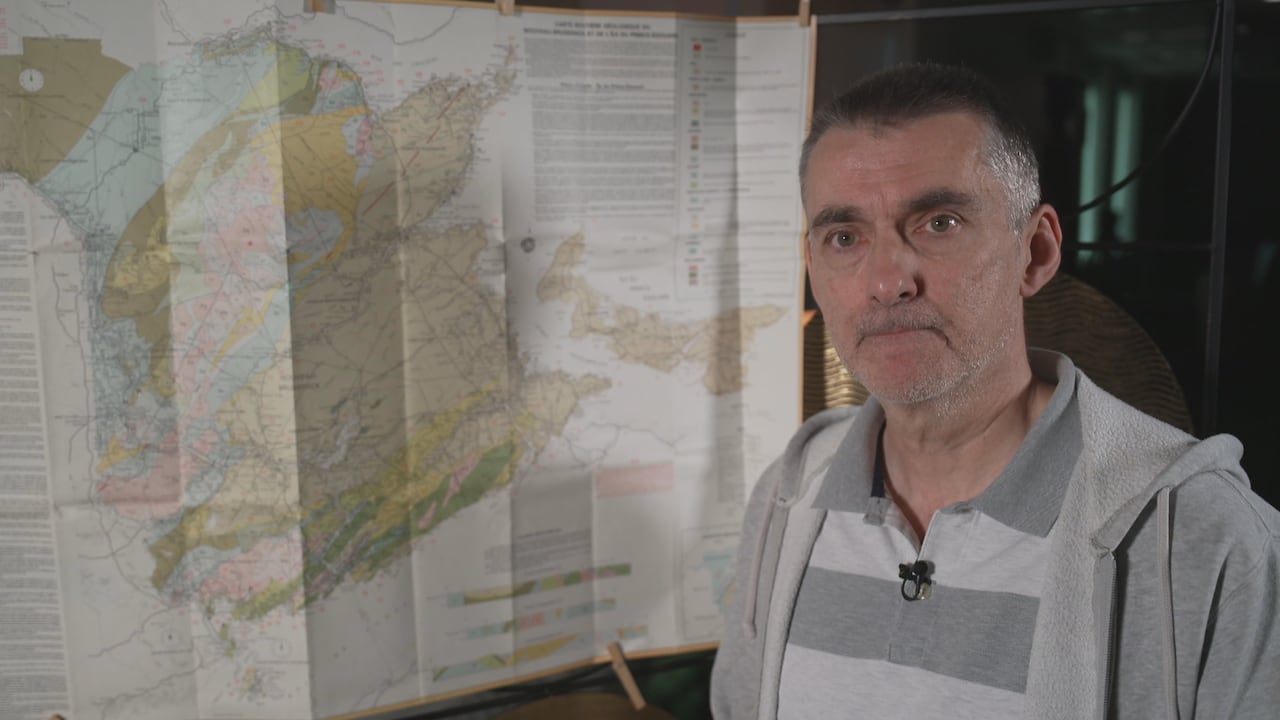
UNB geologist Dave Keighley mentioned that while estimates can provide some insight into gas quantities, the only sure way to confirm is through drilling. (Aniekan Etuhube/CBC)
Prior to the moratorium, seismic tests were conducted across various regions of the province.
Keighley noted that these tests help gauge the volume of shale and the depth at which it lies.
While it is possible to estimate the potential gas volume contained within the rock, without actual drilling, precise information remains elusive.
Such estimates are merely that—estimates.
According to Keighley, the New Brunswick estimates, based on the most optimistic parameters, indicate a 10 to 50 percent chance of finding shale gas in certain areas of the province.

What exactly is shale gas? And where can it be found in the province? Dave Keighley, a professor in the Department of Earth Sciences at the University of New Brunswick in Fredericton, provides insights.
“That’s the most optimistic scenario; the truth is we do not know,” Keighley emphasized.
Lavoie highlighted the significance of recognizing that the mere presence of shale rock does not guarantee the existence of shale gas.
“In some regions, shale exists but has not been buried sufficiently deep, preventing the transformation of organic material into hydrocarbons,” Lavoie explained.
“Understanding the quantity of organic matter in the rock and the depth at which these rocks were buried is crucial.”
Lavoie pointed out that the southeastern part of New Brunswick offers the best prospects for shale gas, due to younger rocks that are more likely to contain the necessary organic matter for hydrocarbon production.
Conversely, the central and northern regions have older rocks with less organic material, making the chances of substantial gas deposits “minimal.”
This article is part of the series Shale Gas Development Revisited: What’s Changed. CBC New Brunswick is examining the developments since the provincial government instituted a moratorium on shale gas exploration in 2014. The government is set to review the moratorium until January 2027, when a decision will be made regarding its potential lifting. If you have a story or tip to share on this topic, please write: nbshalegas@cbc.ca.

