


Experts caution that despite the snowy winter in Nova Scotia, the tick population may not see a significant decrease this year. Contrary to common belief, deep snow cover can actually provide insulation for ticks, helping them survive the cold weather.
According to Laura Ferguson, an assistant professor at Acadia University, the prolonged snow cover acts as a protective layer for ticks, allowing a substantial portion of the population to make it through the winter relatively unscathed.
CBC meteorologist Ryan Snoddon noted that although Nova Scotia experienced some cold spells earlier in the winter, the most effective temperatures for reducing tick populations occurred after the snow cover was already in place.
Notably, the Halifax airport had continuous snow cover from Jan. 18 to March 21, lasting 64 days, the longest duration since 2020.
Ticks typically seek sheltered spots under leaf litter to survive the winter without feeding for months. In extremely cold conditions, their metabolism slows down, limiting their ability to move or feed even if a potential host approaches.
Ferguson highlighted that ticks can endure temperatures between 0°C to -5°C for weeks or months. However, consistent temperatures below -10°C without the protection of snow or leaf litter can lead to mortality, as sudden temperature fluctuations or ice formation inside their bodies can be fatal.
Jantina Toxopeus, an associate professor at St. Francis Xavier University, emphasized that ticks tend to freeze at temperatures below -15°C in laboratory settings but can adapt to gradual temperature changes better than sudden drops.
Despite extreme cold spells, Toxopeus noted that ticks, known for their resilience to cold, have survived harsh conditions in Nova Scotia, suggesting that the population remains stable.
Ferguson anticipates that the upcoming tick season will likely be consistent with previous years, given the resilient nature of the tick population in the region.
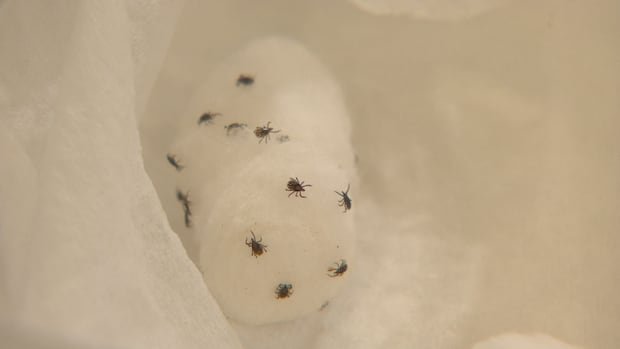
Nova Scotia had a relatively snowy winter, but don’t expect that to knock back the tick population. Experts say the long-lasting snow cover is more of a help than a hindrance. The CBC’s Frances Willick has the story.
MORE TOP STORIES
